Inside the book
The 25 Tips
See the complete five-pillar framework for building relationships, applying cognitive science, using technology with purpose, improving coaching conversations, and designing a sustainable coaching system.
The complete framework
Twenty-five connected moves for the work coaches do every day.
The tip names give you the map. The book adds the research, examples, reflection activities, and implementation guidance that help you decide what to use, when to use it, and how to adapt it to your context.
Pillar 01
Relationships
Build trust, understand the person in front of you, and create the conditions for honest coaching.
- Active Listening
- Finding Hidden Potential in All Teachers
- The Mobile Coach – Being Visible
- Soliciting Feedback
- Having Critical Conversations
Pillar 02
Cognitive Science
Use principles of memory, instruction, modeling, and feedback to make coaching more useful.
- Principles of How We Learn – Working and Long-Term Memory
- Principles of How We Teach
- Managing Cognitive Load
- Modeling, Direct Instruction, and Worked Examples
- Providing Feedback
Pillar 03
EdTech and AI
Help teachers choose technology with purpose and use AI to support planning without losing instructional focus.
- Think Less Is More With Tech
- Unraveling the TPACK
- The Multimedia Principle Plus The Dynamic Drawing Principle
- Using AI to Support Your Coaching
- Using AI to Support in Planning and Content for Lessons
Pillar 04
How Coaching Happens
Move from observation and dialogue to practice, action, and follow-up.
- From Observations to Actionable Feedback
- Types of Coaching Cycles and How to Navigate Them
- Modeling, Rehearsal, and Practice with Feedback During Coaching Sessions
- Focus on Instruction – You Are Not a Therapist
- Navigating Opposition with Various Types of Coaching Styles
Pillar 05
Systems Thinking
Collect useful data, establish coaching routines, and build a clear lane for sustained support.
- Collecting Coaching Data and Using AI to Analyze Coaching Data
- Who to Coach and When to Coach
- Establishing and Maintaining Informal and Formal Coaching Cycles
- Develop a Coaching Website – Create Continuous Coaching Opportunities
- Using Systems Thinking to Pave Your Own Coaching Lane
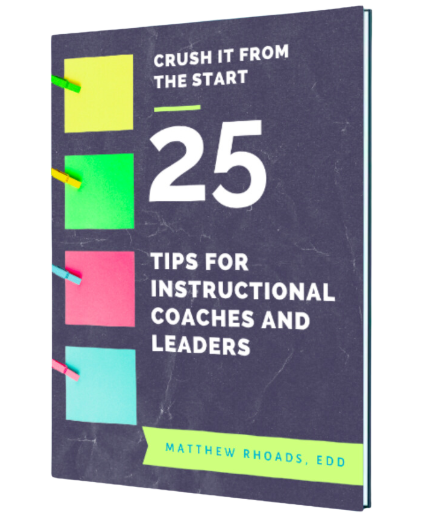
Go beyond the titles
Build the judgment behind each coaching move.
The book connects all 25 tips through practical examples, cognitive science, coaching scenarios, and reflection activities for coaches and the leaders who support them.

